

China put dates on its Moon landing. Its chief designer put mining last
Four flights stand between China and a crewed landing before 2030. The more telling line from Beijing was about when resource work should start, and what kind of lander would carry it.
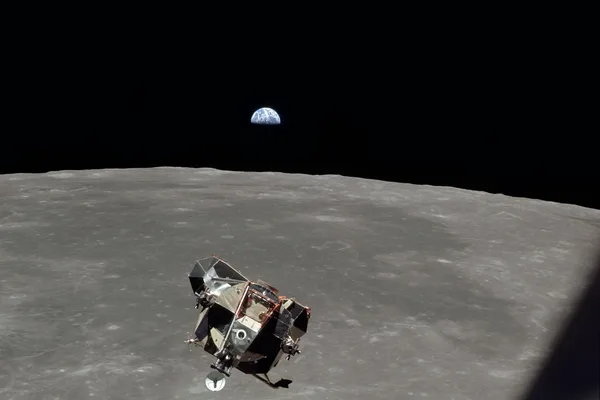
China has a schedule now. At the 7th Manned Space Symposium in Beijing on Oct. 31, lunar program chief designer Wang Xiang walked through the flights leading to a crewed landing “before 2030,” and Ars Technica lined them up from the slides. An uncrewed Long March 10A carries the Mengzhou crew ship to low Earth orbit in early 2027. In 2028 the full Long March 10 flies the Lanyue lander for an uncrewed descent and ascent. A year later, two Long March 10s launch together and the two vehicles dock in lunar orbit with nobody aboard. Then the same pair flies with three astronauts, and two of them land.
There is no crewed lap of the Moon in that list, nothing like Apollo 8 or Artemis II. That’s either confidence or schedule pressure, and NASA’s 2028 target makes the second reading easy.
The line worth keeping came near the end of Wang’s talk. According to the state rocket maker’s English summary, he said future lunar exploration should build knowledge and capability “before moving into resource utilization,” with a prolonged survey phase first. That is the official sequence from the program that runs China’s human landings: land, survey for a long time, then extract.
So anyone who reads the China race as a sprint for south-pole ice is reading it ahead of Beijing’s own plan. The ice hunt sits with the robotic Chang’e line, and that mission slipped to 2027. The crewed program’s first surface stay, per China in Space, is three days with daily spacewalks.
Lanyue’s hardware roadmap says more about resources than the timeline does. Officials put Lanyue’s landing module at 9,000 to 10,000 kilograms out of a 26,000-kilogram total, and sketched variants: cargo, night-capable, reusable, a pressurized lab rover, and surface modules for power, habitation and nuclear power meant for the China-led International Lunar Research Station. Once the Long March 9 flies, a heavy Lanyue could put about 15,000 kilograms on the surface. Mining starts with that kind of tonnage, and China is designing one lander family to carry it instead of a different vehicle for every job.
Our read: China’s first landing is the flag, and the variant chart is the business plan. It puts the industrial phase in the 2030s, after Long March 9 exists. NASA has more crew hardware flying today, while its landers come from two contractors with separate designs.
For job seekers, the mirror image matters. Much American lunar hardware work falls under export controls, and a race framed against China won’t loosen that. Our ITAR guide covers what that means for who can be hired, and who is doing space resources maps the employers. The jobs board carries current lander and propulsion openings.
What would change our view: a 2028 Lanyue test that lands with a prospecting payload aboard. That would pull resource work forward into the first flights rather than after them.
- Ars Technica: China publicly discloses plan for a lunar landing within three years (Nov 2, 2026)
- China Aerospace Science and Technology Corp.: China to adopt two-launch lunar orbit rendezvous plan (Oct 31, 2026)
- China in Space: China Details Precursors to Crewed Moon Landing, Considers Future Exploration (Nov 2026)
- CGTN: China's first crewed lunar mission: Three astronauts, two to land (Oct 31, 2026)
Mars Mining Co. is an independent news site. It is not affiliated with NASA, JAXA, ESA, SpaceX or any company mentioned. Nothing here is investment advice. Full disclaimer.