

Lunar Outpost built a rover factory in Golden. Its job board shows who the Moon hires first
The Pegasus builder opened a 62,500-square-foot headquarters sized for more than 250 people. Its open roles are mostly harness, test, autonomy and mission ops work, plus eleven summer 2027 internships.
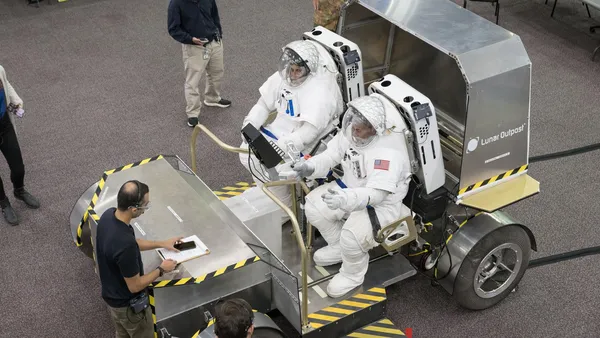
Lunar Outpost opened a 62,500-square-foot headquarters in Golden, Colo., on Tuesday. The company says it can work on dozens of lunar terrain vehicle-class spacecraft at once and seat more than 250 employees. Inside: two mission control rooms, several cleanrooms, thermal vacuum testing space, a machine shop, and avionics and guidance labs.
A new building is usually not news. This one is, because of what goes down the assembly line. In May, NASA gave Lunar Outpost $220 million to build Pegasus, one of the first two lunar terrain vehicles for Moon Base. The rival award, $219 million, went to Astrolab. Both are due on the south pole by 2028, carried there by Blue Origin landers.
The rover comes before the mine
NASA’s own Moon Base plan makes the case. Phase One LTVs have to last at least a year, cross 20-degree slopes and survive 150 hours in shadow. By Phase Three, the agency wants vehicles built for “permanently shadowed region exploration, and regolith handling.” That is a timeline for resource work. Lunar Outpost’s May announcement lists resource prospecting and site preparation among Pegasus’s jobs. It also says the rover draws on MAPP, the company’s Mobile Autonomous Prospecting Platform. Long before anyone hauls ice-bearing regolith, they need wheels that keep running through a polar night. A company building those vehicles in batches is where the ice business starts.
The manifest is growing too. In May the company counted nine contracted lunar and cislunar missions. The Golden release says ten before 2030.
What the hiring looks like
On Wednesday morning, Lunar Outpost’s US careers page listed 38 openings plus a general application, all in Golden. Most are engineering roles: embedded software, perception, RF, harnessing, mechanical analysis, assembly-integration-and-test, mission direction, flight engineering. There’s one hands-on technician role, an electronics and harness tech. And eleven are summer 2027 internships, covering robotics, thermal, simulation, test, ground software and systems.
That mix is the point. A rover company growing into this much floor space needs people who can wire, test and run missions, and it needs them before it needs scientists. If you’ve built harnesses for aircraft or cars, that tech opening and the harnessing engineer post are the way in. Students should apply to the summer roles now. Our internships page and the 2027 internships guide track similar deadlines.
Lunar Outpost isn’t on our board yet. Colorado’s other lunar employers are: ispace has test, flight software and manufacturing roles in Englewood, and Rocket Lab has 2027 interns in Littleton. See robotics career paths for how rover autonomy jobs are structured.
What would change our view: a slip in the Pegasus delivery date. NASA’s 2028 target leans on Blue Origin’s lander being ready. If that date moves, a building designed for 250 people could stay half-empty for a while.
- Lunar Outpost: Lunar Outpost Opens New Colorado Headquarters (GlobeNewswire, Nov 17, 2026)
- Lunar Outpost: NASA Selects Lunar Outpost to Deliver Next-Gen Crewed Lunar Terrain Vehicle (May 26, 2026)
- NASA: Moon Base Systems
- Lunar Outpost careers (US openings, checked Nov 18, 2026)
- NASA Image Library: Crewed Lunar Terrain Vehicle Testing (jsc2026e417620)
Mars Mining Co. is an independent news site. It is not affiliated with NASA, JAXA, ESA, SpaceX or any company mentioned. Nothing here is investment advice. Full disclaimer.