

NASA's astronaut application closes Dec. 3. Last round, about one applicant in 800 made it
The next class trains for Moon Base and lunar geology. The bar is a STEM master's plus three years of work, and the jobs that build those qualifications are the realistic way into the program.
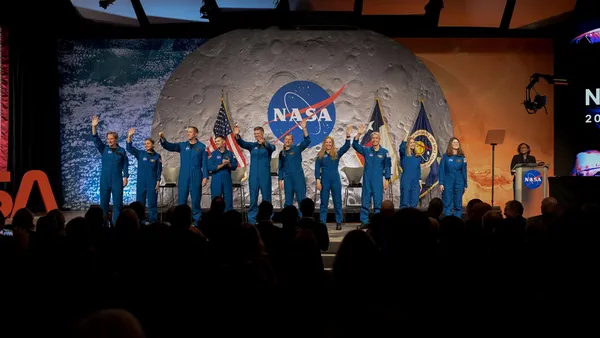
NASA opened applications for its next astronaut class on Nov. 7, and the window is short: U.S. citizens have until 11:59 p.m. EST on Thursday, Dec. 3. Final selection is expected in late 2027.
Start with the odds, because NASA published them. The 2024 call drew more than 8,000 applications and produced 10 astronaut candidates. That works out to roughly one selection per 800 applicants. The corps currently has 32 active astronauts, and only 370 people have been picked as candidates since the 1960s.
The pitch has changed, though. Administrator Jared Isaacman says the new class could “live and work at the Moon Base” and “help pioneer the systems and operations” for Mars. The training list in the release names spacewalking, high-performance jet operations and lunar geology. That last one matters to us. If crews land near the south pole looking at ice-bearing ground, the first human prospectors on the Moon will be astronauts with a geology course behind them, working alongside rovers like the drilling one we covered on Monday.
The timing also tells you something. Selection in late 2027, followed by training on the scale of the current class’s nearly two years, means this group likely wouldn’t be flight-eligible before about 2029. That’s our estimate, not NASA’s, but it lines up with the Moon Base build-out rather than the first Artemis landings.
Who actually qualifies
The basic requirements are a STEM master’s degree (engineering, biological or physical science, computer science) and at least three years of related professional work after it. Two years toward a technical doctorate counts, and so do medical degrees, including physician assistant and nurse practitioner credentials. Test pilots qualify through a STEM bachelor’s plus test pilot school finished by July 2027. Pilots can count flight hours, starting at 750 hours as pilot in command in high-performance jets.
Read that as a career plan rather than a lottery ticket. The three years of experience have to come from somewhere, and the jobs that supply them are the same ones that keep the 32 flyers alive: propulsion and structures engineering, flight software, life support, medicine. If you’re short of the bar this round, the useful move is to spend the next cycle in one of those roles. Blue Origin, SpaceX and Vast are all hiring on our jobs board, and the guide on breaking into aerospace without an aerospace degree covers the routes in from other fields.
What would change our view: a class much larger than 10. If Moon Base staffing pushes NASA to select two or three times that, the odds stop looking like one in 800 and applying this round becomes a much better bet.
Mars Mining Co. is an independent news site. It is not affiliated with NASA, JAXA, ESA, SpaceX or any company mentioned. Nothing here is investment advice. Full disclaimer.