

NASA's first Moon reactor is sized at 20 kilowatts. Last year's order asked for 100
NASA wants proposals by Dec. 21 for Lunar Reactor-1, a single fission unit to be ready for launch by December 2030. It's enough to keep a camp running through the lunar night. It isn't enough to run a mine.
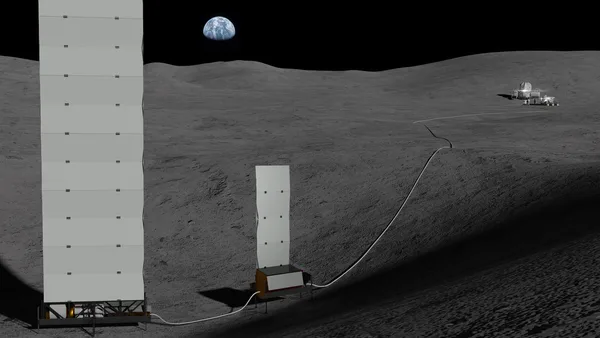
NASA asked industry Monday to bid on Lunar Reactor-1, a fission power system meant to produce 20 kilowatts of electricity on the Moon and keep doing it for at least five years. The final solicitation went up on SAM.gov on Nov. 20. Proposals are due Dec. 21.
Set that 20 next to a number from fifteen months ago. The August 2025 directive that restarted this program called for at least 100 kilowatts, and it explained why: industry had told NASA that long-term human operations “including in-situ resource utilization” need at least 100kWe. That same memo wanted launch readiness by the first quarter of fiscal 2030. The new statement of work says December 2030.
So the reactor got a fifth as big and about a year later. We think that’s the honest version. The directive itself admits NASA has spent more than $200 million on surface fission since 2000 “with no significant advancement towards flight system readiness.” A smaller unit that flies beats a bigger one that stays a study.
But read it for what it is. LR-1 powers a camp: habitats, radios, rovers, instruments, the list in NASA’s release. By the yardstick NASA quoted last year, it falls well short of what resource extraction needs. Pulling water out of cold regolith, the subject of our lunar ice explainer, is the power-hungry step in every ISRU plan. The hint at what comes next sits in the requirements. LR-1 must use a single reactor, a choice the SOW defends as “critical to reduce risk and ensure extensibility to higher power systems,” and it has to keep delivering 20 kilowatts after any single failure.
The first jobs aren’t nuclear
Phase 1 runs 18 months and produces a preliminary design, an electrically heated engineering test unit and component radiation tests. “Currently, only a design phase with hardware demonstrations is authorized,” the SOW says. An electrically heated test means the early work goes to thermal, power-conversion, controls and test people, plus the technicians who wire and instrument the rig. Fuel comes later, if follow-on phases get funded.
Some of those skills are already hiring on our board, at companies building reactors on Earth. On Monday Valar Atomics listed 51 roles, mostly in Torrance, including a test engineer on its Numenor reactor, a director of power-conversion mechanical engineering and several instrumentation-and-controls slots. Oklo had 11, among them a criticality-safety engineer, a radiation safety officer and a facilities electrician in Idaho Falls. We don’t know whether either will bid on LR-1. The work looks the same either way. The electrician route is in our apprenticeship guide, and power-hardware roles across the board sit under the Systems department.
What would change our view: if the first SPARC task orders asked for more than 20 kilowatts, or funded a second, larger unit, the 100-kilowatt mining case would be back on the schedule. Watch for awards after Dec. 21.
- NASA: NASA Seeks Partners to Design First Nuclear Reactor for the Moon (Nov 23, 2026)
- SAM.gov: Space Power and Reactor Capabilities (SPARC) Final RFP, 80GRC027R0005 (posted Nov 20, 2026)
- LR-1 Phase 1 task order statement of work, Att. J.2-05 (via GovTribe)
- NASA: Directive on Fission Surface Power Development (Aug 4, 2025)
Mars Mining Co. is an independent news site. It is not affiliated with NASA, JAXA, ESA, SpaceX or any company mentioned. Nothing here is investment advice. Full disclaimer.