

NASA just paid a Texas lab to figure out how hard icy Moon dirt is to dig
UT San Antonio gets $1 million to freeze, scoop and measure polar regolith before anyone tries to mine it. The student pipeline may matter as much as the data.
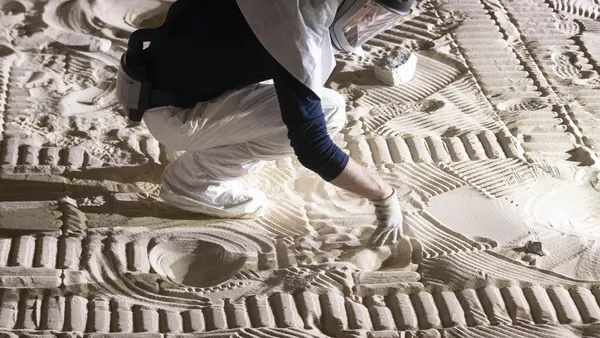
Every lunar ice pitch skips a boring question: once you are standing in a permanently shadowed crater, can you actually dig the stuff up? UT San Antonio announced on Nov. 5 that NASA is paying the university about $1 million over two years to answer that before someone bets a lander on it.
Funding comes through NASA’s MUREP Space Technology Artemis Research program, M-STAR, which selected 12 institutions nationwide for up to $1 million each. UT San Antonio’s project builds a Multi-Planetary Surface Simulator, MPS2, inside its LEAP lab. Inside that chamber, temperature, pressure, atmosphere, humidity and radiation can be dialed so icy regolith behaves the way it would outside, near and inside a polar shadow.
One useful word in the university write-up is “scoopability.” Alan Whittington, who runs the HAMSTER lab on the same award, puts it plainly: Artemis wants a south-pole base because the ice is there, but that ice is mixed into soil, and the mix may be very hard to dig. His team will measure cohesion, flow, compaction and how water moves through the grains as the temperature cycles. Four campus labs split the work, with Southwest Research Institute scientists as co-investigators. One group even builds sensors that have to survive the cold they are measuring.
Orbital maps cannot close that gap. Hydrogen detections from Lunar Reconnaissance Orbiter tell you where to look. They do not tell you whether the next scoop comes out as powder, concrete or something that sticks to the blade and never leaves. Excavation, conveyor and processor designs all hang on those numbers. Without them, every ISRU demo is guessing at the feedstock.
Workforce training is not a side note here. Each summer the award funds three UT San Antonio students for ten-week stints at JPL, Johnson Space Center or Goddard. On campus it pays four undergrads per semester, a master’s student, a postdoc, plus summer spots for local community-college and high-school students. Paid interns start in spring 2027. For anyone mapping how to enter space resources work without a legacy aerospace pedigree, this is the pattern that scales: minority-serving labs doing hardware NASA needs, with a direct line into the centers that hire.
Texas already concentrates a lot of that hiring. Our Houston jobs page and the jobs board list current openings around JSC and the wider state. For the science itself, see what we know about lunar water ice, ISRU basics and careers in space mining.
What would change our view: if the first published MPS2 results show icy regolith stays diggable across the ice fractions people actually expect at the poles. That would pull a lot of excavation hardware out of the “wait for better data” holding pattern. If it comes out like frozen concrete at those fractions, the first ISRU missions need heaters and breakers, not just scoops.
Mars Mining Co. is an independent news site. It is not affiliated with NASA, JAXA, ESA, SpaceX or any company mentioned. Nothing here is investment advice. Full disclaimer.