
Starship payload math for people who want to mine the Moon
What 100-plus tonnes to orbit really buys on the lunar surface, why refilling is the whole game, and the per-kilogram number to watch.
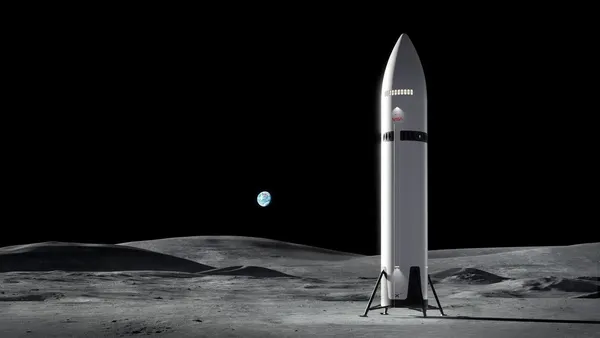
SpaceX’s current spec sheet lists Starship at more than 100 metric tonnes to orbit, fully reusable, with a ship stage that holds 1,600 tonnes of propellant. Its September update says that with on-orbit refilling the lunar version can carry up to 100 tons to the Moon’s surface. Those two numbers look alike. They describe completely different operations, and the difference is where every lunar business plan lives or dies.
Getting 100 tonnes to low Earth orbit is one launch. Getting 100 tonnes onto the Moon means parking a ship in orbit and topping it up from tankers first, because the ship burns most of its own load just reaching orbit. How many tankers? SpaceX doesn’t publish a current figure. Space Daily notes that a 2021 GAO bid-protest decision described one early SpaceX lunar concept using 14 tankers in a 16-launch sequence, and warns that the number has surely moved since. We’d treat “somewhere around ten” as the planning assumption until SpaceX says otherwise, and treat that as a guess.
Now the money. CNN reported that a SpaceX customer’s financial disclosure put Starship’s per-launch sticker price at about $90 million. At 100 tonnes to orbit that’s roughly $900 per kilogram, already well below anything flying today. Multiply by a dozen-odd launches for one lunar delivery and the surface price lands somewhere in the low thousands of dollars per kilogram before you count the lander itself. Cheap by historical standards. Still dear for water.
What this does to ISRU
Here’s the uncomfortable implication for lunar miners. If Starship reaches the flight rates SpaceX talks about (its update describes a vision of launches every hour carrying 200 tons each), shipping water and oxygen from Earth gets cheaper every year. A lunar ice plant has to beat a falling price.
The other side of the ledger helps the miners. The same refilled Starship that delivers cargo also delivers the plant, cheaply, in one piece, at 100 tonnes a time. A heavy, robust, maintainable ISRU kit was unthinkable when lunar landers carried a tonne or two. And the most valuable product a lunar plant can make is propellant sold in lunar orbit, where it replaces several Earth-launched tankers at once.
We think Starship raises the bar for lunar ISRU on bulk consumables and lowers it for propellant. Plans built around selling water to a base look weaker in a cheap-launch world. Plans built around refueling landers look stronger.
What would change our mind: a successful ship-to-ship transfer that reveals far fewer tankers are needed per lunar sortie than the early concepts implied. Cheaper delivery to the surface would undercut lunar propellant too.
Not affiliated with NASA, SpaceX or any agency or company mentioned. Not investment advice. Disclaimer.