
Mars regolith chemistry: perchlorate, ice and the toxic-soil problem
Martian soil is chemically more interesting than the Moon's and also more hostile. Here's what the landers found.
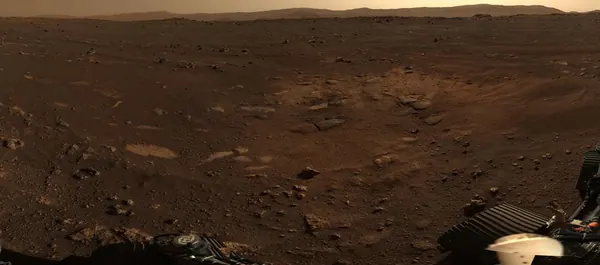
In 2008 NASA’s Phoenix lander mixed Martian soil with water in its wet chemistry lab and found perchlorate, a reactive chlorine salt, at roughly half a percent by weight. The 2009 Science paper by Hecht and colleagues reported it as a dominant soluble component of the soil. For anyone planning to farm, mine or breathe near Martian dirt, that single result reshaped the problem.
Perchlorate matters for two reasons. On Earth it’s a regulated contaminant because it interferes with the thyroid, so dust tracked into a habitat is a health issue, not a housekeeping one. And it’s an oxidizer, which complicates heating soil to drive off water, since you’re cooking a mildly reactive salt along with your feedstock. Any Mars water plant that works from soil instead of ice has to plan for it.
The good news is that Mars has a lot of water ice, and some of it is close to the surface outside the poles. The Subsurface Water Ice Mapping project combines orbital radar, thermal and imaging data into maps of where buried ice is likely in the mid-latitudes, which is where landing engineers prefer to go. Those maps are the closest thing Mars has to a prospecting survey, and they’re built entirely from orbit.
Mars also has the resource the Moon lacks: an atmosphere. It’s thin, but it is mostly carbon dioxide, and MOXIE showed you can split oxygen off it on the surface. Add hydrogen from ice and you have the inputs for methane and oxygen, the propellant pair Starship burns. That chain, ice plus air to rocket fuel, is the core of every serious Mars return plan.
Our take: on Mars the atmosphere is the easy feedstock and the soil is the hard one. Mining plans that start from regolith are solving the wrong problem first. Ice, ideally shallow and relatively clean, decides where the first base goes.
What would change our mind: a lander or rover measurement showing mid-latitude ice is much dirtier, deeper or more salt-laden than the orbital maps suggest.
Not affiliated with NASA, SpaceX or any agency or company mentioned. Not investment advice. Disclaimer.